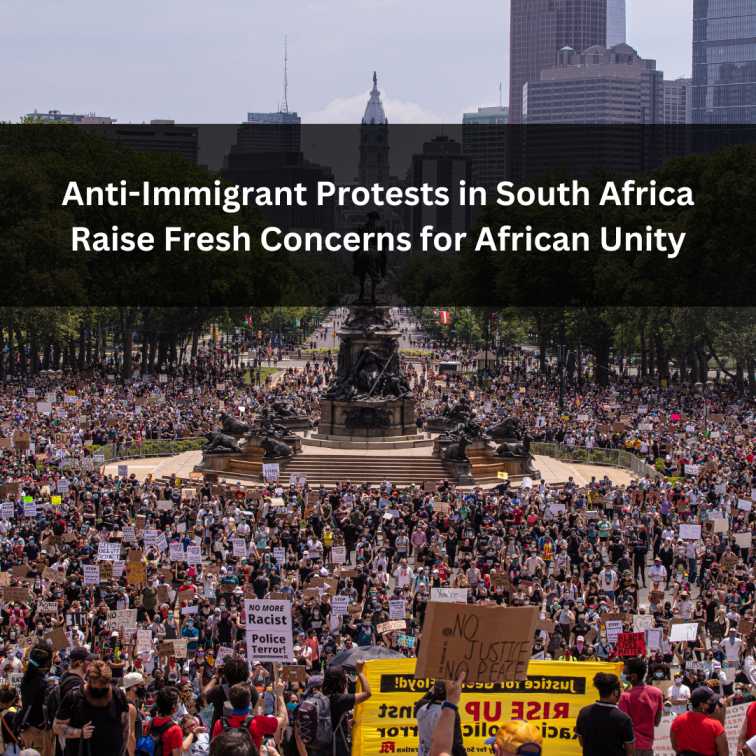
Recent xenophobic attacks and anti-immigrant protests in South Africa have once again sparked outrage across Africa, prompting strong reactions from Nigeria, Ghana, and other African nations.
Over the past few weeks, videos circulating on social media have shown groups of protesters marching through communities, confronting foreign-owned businesses, and demanding that African migrants leave the country. The developments have reignited concerns over the safety of foreign nationals living and working in South Africa while raising fresh questions about African unity and regional cooperation.
Although South Africa continues to struggle with high unemployment, crime, and economic hardship, many observers argue that targeting migrants is unlikely to solve the country’s underlying challenges.
What Is Happening in South Africa?
The latest wave of anti-immigrant protests has seen demonstrators calling for stricter immigration enforcement and the removal of undocumented foreign nationals from South Africa.
International news organizations have reported incidents in which businesses owned by foreign nationals were forced to close temporarily due to threats of violence, while some migrants fled affected communities for their safety.
Many of those targeted come from other African countries, including Nigeria, Ghana, Zimbabwe, Ethiopia, Somalia, Mozambique, Malawi, and the Democratic Republic of Congo.
South African authorities have repeatedly stated that immigration enforcement should be carried out by government agencies—not by individuals or vigilante groups.
Viral Videos Fuel Concern Across Africa
Several videos shared on Instagram, TikTok, Facebook, and X (formerly Twitter) appear to show protesters visiting businesses owned by foreign nationals and demanding that workers prove their immigration status.
In some of the videos, demonstrators warn business owners not to employ undocumented migrants, while others threaten to shut down businesses that fail to comply.
Although the authenticity and full context of every viral video cannot be independently verified, reputable international media have reported similar incidents in parts of Johannesburg, Durban, and other communities where anti-migrant demonstrations have taken place.
The videos have generated widespread debate across Africa, with many expressing concern that both documented and undocumented migrants are being targeted simply because they are foreigners.
Why Are the Protests Happening?
South Africa has one of the highest unemployment rates in the world, and many citizens are facing increasing economic pressure.
Supporters of the protests argue that undocumented immigration contributes to unemployment, crime, and pressure on public services.
However, economists and policy experts generally point out that South Africa’s economic challenges are driven by several complex factors, including:
- High unemployment
- Slow economic growth
- Energy shortages
- Poverty and inequality
- Skills shortages
- Weak economic performance
Many analysts say that while governments have the right to enforce immigration laws, violence against migrants does not address the root causes of these long-standing challenges.
Nigeria Responds
The Nigerian government has strongly condemned the attacks on its citizens and other African migrants living in South Africa.
As tensions escalated, Nigeria organized the voluntary evacuation of approximately 1,490 Nigerians who wished to return home due to safety concerns.
Nigerian officials have urged South African authorities to protect foreign nationals, investigate the attacks, and bring those responsible to justice. They have also appealed for calm while discouraging any retaliatory actions against South African citizens or businesses in Nigeria.
Ghana Also Speaks Out
Ghana has likewise condemned the attacks and expressed concern over the safety of its citizens.
The Ghanaian government has assisted affected nationals, engaged South African authorities through diplomatic channels, and called for stronger continental efforts to address xenophobia.
Officials have emphasized that repeated attacks on African migrants undermine the vision of a united Africa and threaten regional cooperation.
Not All South Africans Support the Violence
It is important to note that the recent incidents do not represent the views of all South Africans.
Many South Africans have publicly condemned the attacks, arguing that violence and intimidation are not the solution to the country’s economic challenges. Religious leaders, civil society organizations, business groups, and ordinary citizens have all spoken out against xenophobia and called for peaceful coexistence.
Across social media, many South Africans have defended foreign nationals, pointing out that many immigrants own legitimate businesses, create employment opportunities, pay taxes, and contribute to the country’s economy.
President Cyril Ramaphosa has also condemned violence against foreign nationals, stressing that immigration enforcement must remain the responsibility of law enforcement agencies rather than vigilante groups.
Has Removing Foreigners Solved the Problem?
One of the key arguments made by critics of the protests is that blaming migrants has not resolved South Africa’s economic challenges.
Reports indicate that some foreign nationals have already left affected communities or returned to their home countries following the unrest. However, unemployment, poverty, and the rising cost of living remain major concerns for many South Africans.
Economists have long argued that these challenges are rooted in broader structural issues, including slow economic growth, infrastructure constraints, electricity shortages, and inequality.
Many observers believe that while illegal immigration should be addressed through lawful immigration policies, removing migrants alone is unlikely to create the millions of jobs needed to reduce unemployment.
Why This Matters for Africa
The renewed xenophobic attacks have once again raised concerns about the future of African integration.
Initiatives such as the African Continental Free Trade Area (AfCFTA) and the African Union’s Agenda 2063 promote greater cooperation, trade, and the free movement of people across the continent.
Repeated attacks on African migrants risk undermining these goals and damaging diplomatic relations between African countries.
Many African leaders have called for governments to balance effective immigration enforcement with respect for human rights and the rule of law.
Looking Ahead
South Africa has experienced several waves of xenophobic violence over the past two decades, including major outbreaks in 2008, 2015, 2019, and now again in 2026.
While the country continues to grapple with difficult economic realities, many experts believe lasting solutions will require stronger job creation, economic reforms, improved border management, and better cooperation among African governments—not violence against fellow Africans.
As Nigeria, Ghana, South Africa, and other African nations continue diplomatic discussions, many hope the current crisis will encourage renewed efforts toward peaceful coexistence, mutual respect, and a stronger, more united Africa.
Final Thoughts
The latest xenophobic attacks in South Africa have once again highlighted the complex relationship between migration, economic hardship, and national security. Governments have a legitimate responsibility to enforce immigration laws, but that responsibility must be exercised through legal institutions and with respect for human rights.
The violence has affected not only migrants but also regional relations and Africa’s vision of unity. At the same time, it is important to recognize that many South Africans have rejected xenophobia and continue to stand alongside their fellow Africans, demonstrating that the actions of a few should not define an entire nation.
As the continent watches closely, many hope this moment becomes an opportunity for African leaders to work together in addressing migration, economic development, and the shared goal of building a peaceful and prosperous Africa.